Unlock True Crypto Security: Your Journey Starts at Trezor.io/start
In the fast-paced world of cryptocurrency, protecting your digital assets is paramount. Exchanges can be hacked, software wallets can be compromised by malware, and online threats are constantly evolving. This is why the concept of a hardware wallet—a piece of dedicated, offline security—has become the gold standard. And for millions, the journey to ultimate self-custody begins at Trezor.io/start.
Trezor, the original hardware wallet, has long been a pioneer in this space, and their official onboarding portal is designed to make the crucial step of securing your crypto simple and bulletproof. It’s more than just a setup page; it’s the gateway to taking complete control of your digital wealth through the power of Trezor Suite.
What is Trezor.io/start?
Simply put, Trezor.io/start is the official starting point for setting up your new Trezor hardware wallet, whether it’s the original Model One, the Model T, or the newer Safe series. The page directs you to the necessary software—the Trezor Suite—and provides the foundational security steps you must take before depositing any funds.
The core philosophy behind this process is security through isolation. Your Trezor device is designed to keep your private keys—the cryptographic "master password" to your crypto—completely offline, or in cold storage. This means no hacker, no malware, and no phishing attack can steal your keys because they never leave the physical device. The device acts as a secure signing agent, confirming transactions only when you physically approve them.
The Trezor Suite: Your Command Center
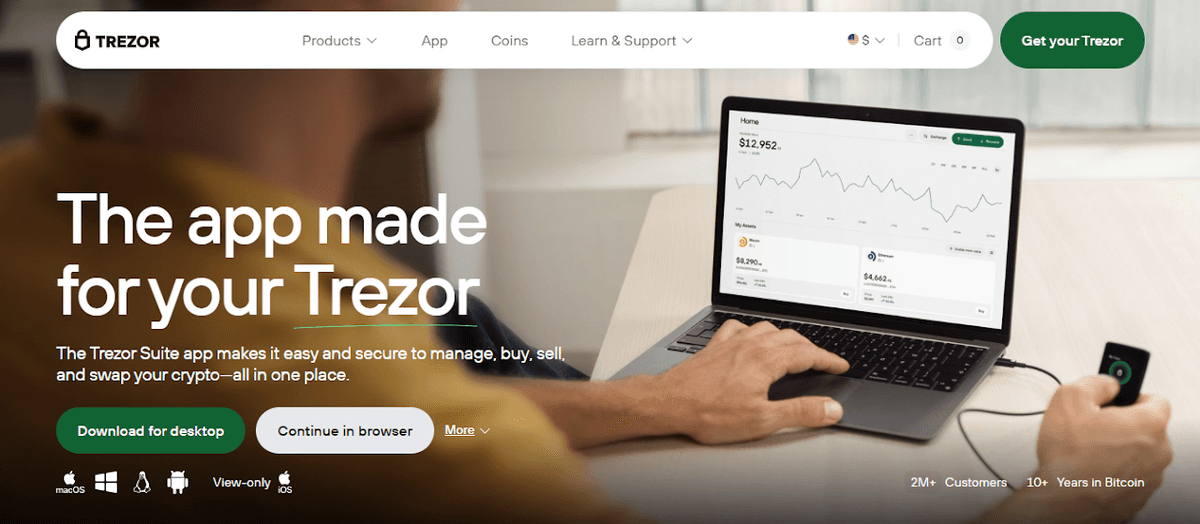
The first and most important step after unboxing and inspecting your device is downloading and installing the Trezor Suite. This is the official, all-in-one application that manages your Trezor. While in the past, users might have interacted with a simple web wallet, Trezor Suite offers a dedicated, often desktop-based, application that enhances security, privacy, and functionality.
Key features of the Trezor Suite include:
Secure Desktop App: Running a dedicated desktop app (or the web version via the portal) isolates your wallet operations from common browser threats like phishing and tracking.
Intuitive Interface: It allows you to check balances, send, receive, and manage your portfolio of Bitcoin, Ethereum, and thousands of other coins and tokens with ease.
Integrated Services: Trezor Suite integrates with verified third-party providers (like Invity, a SatoshiLabs company) for securely buying, selling, and swapping crypto directly into your cold storage wallet.
Advanced Privacy: Features like support for Tor (The Onion Router) network and CoinJoin (for Bitcoin) are often integrated, giving you tools for enhanced financial privacy.
The Setup: Three Crucial Security Steps
The guided process on Trezor.io/start ensures you perform the three most critical security steps correctly:
1. Device and Firmware Check
When you first connect your new Trezor, the Suite checks the device’s authenticity and prompts you to install the latest firmware. Firmware is the operating software on the device. This ensures you are starting with the most secure and up-to-date version, protecting you from potential vulnerabilities.
2. Create and Secure Your Wallet Backup (Recovery Seed)
This is arguably the single most important step. Your Trezor will generate a sequence of 12, 18, or 24 words (depending on the model and settings), known as your wallet backup or recovery seed.
Crucial Warning: This word list is your absolute master key. If your physical Trezor device is lost, stolen, or broken, this sequence is the only way to recover your funds onto a new device. You must write these words down on the provided recovery cards (never photograph or store them digitally) and secure them in a safe, offline location—ideally separate from your device. Never, under any circumstances, type this seed phrase into a computer or phone.
3. Set a PIN
The final layer of physical security is setting a PIN. This is entered directly on the Trezor device (or by referring to a unique, randomized number matrix on the screen for the Model One) and protects the device from unauthorized physical access. If someone steals your Trezor, the PIN prevents them from immediately accessing the funds.
Beyond Setup: Full Self-Custody
Once setup is complete, you can confidently start moving your crypto from exchanges or software wallets to your new Trezor addresses, which are generated and managed within the Trezor Suite.
Moving your assets to a Trezor through the Trezor.io/start process fundamentally shifts your status from a crypto holder to a true crypto owner. You move from relying on an exchange to be the custodian of your keys to becoming the custodian yourself. This independence and security are the reasons why Trezor has remained a trusted name in the industry.
If you’ve just unboxed your Trezor, or are considering one, the path to secure, self-sovereign crypto management is clear: head to Trezor.io/start and take that essential first step.